



Dacia Duster Towbars: The Ultimate UK Towing Guide Across Generations
When Dacia officially launched on British shores in January 2013, it completely disrupted the UK car market. Promoted under the ethos of "shockingly affordable," the Dacia Duster proved that you didn't need to spend premium money to secure a rugged, highly capable family SUV.
For the UK towing community, the Duster quickly transformed from a budget curiosity into an award-winning staple. By pairing robust Renault-derived mechanicals with short gear ratios and an optional Nissan-engineered four-wheel-drive system, it became a giant-killer at the annual Tow Car Awards. Whether you are hauling a lightweight weekend caravan, hitching up a camping trailer, or loading a family set of heavy e-bikes onto a towball-mounted carrier, the Duster stands out as one of the most practical, no-nonsense tow cars on our roads.
However, because its chassis architecture, electrical systems, and powertrain tech have evolved significantly over the years, selecting the right custom-fit towbar depends entirely on which generation you park on your driveway.
A Potted History of the Duster as a Tow Car
To guide you directly to the correct sub-collection for your vehicle, here is how the Duster evolved through its key iterations in the UK.
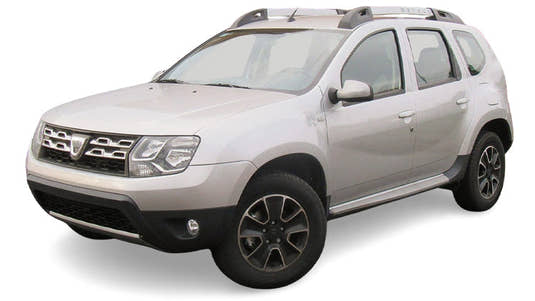
First Generation (Mk1 / HS Series) – 2013 - 2018
The model that started the revolution. While launched globally in 2010, the right-hand-drive Mk1 arrived in the UK for 2013. Early models were actually manufactured in Chennai, India, before production for the UK market successfully transitioned to Pitesti, Romania, in 2014. Famed for its unapologetically basic entry-level models (which initially lacked a radio or air conditioning), it shocked the towing press when the Ambiance 4x4 model went on to win the Caravan Club Tow Car of the Year in its class. It relied on robust, purely mechanical layouts with a maximum 1,500kg braked towing limit.
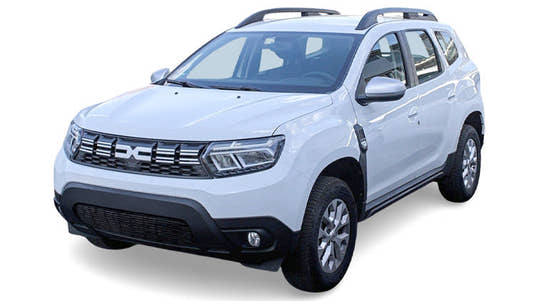
Second Generation (Mk2 / HM Series) – 2018 - 2024
Arriving in mid-2018, the Mk2 retained the exact same rugged footprint but significantly upgraded refinement, structural stiffness, and sound insulation. Inside, the interior plastics were vastly improved, and modern infotainment took centre stage. Underneath, a major mid-lifecycle facelift in 2021/2022 introduced updated Euro 6d-compliant engines and the option of an automatic dual-clutch transmission (EDC). Crucially for towers, the maximum vertical towball weight remained highly versatile, making it a firm favourite for rear-mounted cycle carriers.
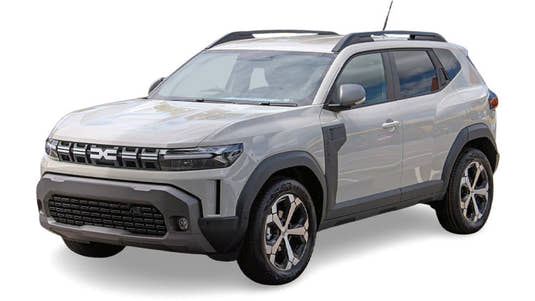
Third Generation (Mk3 / P1310 Series) – 2024 - Present
A complete technological rebirth built on the advanced CMF-B platform. The current Mk3 drops traditional pure diesel engines entirely in favour of highly sophisticated "TCe" mild-hybrids and a full self-charging Hybrid 140 powertrain. While it introduces advanced driver assistance systems and digital towing profiles, it completely alters the mechanical undertray spacing, demanding highly specialized, modern towbar configurations.
Technical Towing Performance: 2WD vs. 4x4
One of the single most critical considerations for Dacia Duster owners is identifying whether their vehicle is Two-Wheel Drive (2WD) or All-Wheel Drive (4x4). Do not be fooled by the chunky SUV body arches—many Dusters sold in the UK drive purely through the front wheels.
| Configuration Attribute | Dacia Duster 2WD Variants | Dacia Duster 4x4 Variants |
|---|---|---|
| Maximum Braked Capacity | 1,200 kg – 1,500 kg (Engine dependent) | 1,500 kg across all generations |
| Maximum Unbraked Capacity | 600 kg – 680 kg | 750 kg (Chassis maximum) |
| Maximum Vertical Noseweight | 75 kg | 75 kg – 80 kg |
| First Gear Ratio Layout | Standard road ratio | Ultra-short crawler gear (Acts like low-range) |
The Tower's Expert Secret: The 4x4 Crawler Gear
If you pull trailers or caravans, the 4x4 versions of the Mk1 and Mk2 Duster hide an incredible mechanical asset. Instead of fitting a heavy, complex twin-speed transfer box, Dacia engineered a bespoke 6-speed manual transmission with an ultra-short first gear. It is so low that you normally pull away in 2nd gear during everyday solo driving. When you are hitched up, this short 1st gear acts as a brilliant mechanical crawler, letting you pull a 1.5-tonne caravan up steep, damp campsite hills or muddy slipways without burning or slipping the clutch.
Real-World Towing Pitfalls to Watch Out For
If you are choosing a Duster or prepping your existing rig for a heavy haul, keep these specific practical factors in mind:
- The Bi-Fuel / LPG Spare Wheel Dilemma: Dacia's popular Eco-G Bi-Fuel models run on both petrol and LPG. Because the factory LPG gas tank is mounted inside the circular well beneath the boot floor where the spare wheel usually sits, you cannot carry a full-sized spare tyre. If you tow a caravan long distances, you will need to rely on a puncture repair kit or store a spare tyre within the main luggage area.
- Soft Rear Suspension Springs: Dusters are celebrated for their soft, highly absorbent, long-travel suspension ride, which handles broken UK tarmac beautifully. However, when loaded to the maximum 75kg towball noseweight limit, the rear end can noticeably compress. Always pack your caravan or trailer defensively, distributing heavy items over the axle to keep your noseweight true and your outfit perfectly level.
- Electrical System Sensitivity: While early Mk1 Dusters used rudimentary wiring systems, the Mk2 and Mk3 generations feature highly advanced multiplexed CAN-bus architectures linked to safety systems like Blind Spot Warning and electronic stability control.
Selecting Your Dacia Duster Towbar & Electrics
Every custom kit within our collection is fully type-approved, ensuring a seamless fit directly onto Dacia's engineered factory mounting points without structural modifications.
Choosing Your Towball Style
- Detachable Swan Neck Towbars: Highly recommended for everyday drivers. When you aren't pulling your caravan or trailer, you can detach the towball neck entirely in seconds, keeping the rugged, clean profile of the Duster's rear bumper pristine and avoiding any false alerts from rear parking sensors.
- Fixed Swan Neck / Fixed Flange Towbars: Robust, permanent fixtures preferred by commercial trailer towers or regular caravanners who want an always-ready towing setup.
The Importance of Vehicle-Specific Wiring Kits
Because modern Duster variants share their electrical nervous systems with Renault and Nissan, bypassing these circuits with a generic, universal relay is highly discouraged.
By selecting a dedicated vehicle-specific wiring kit, your installation integrates directly with the vehicle's onboard computer. When a 13-pin trailer plug is inserted, it informs the vehicle to adjust its engine cooling management, optimize the Electronic Stability Programme (ESP) to account for trailer momentum, and safely mute the rear parking sensors whenever you shift into reverse gear.
Select your specific Dacia Duster year range above to find the perfect custom-fit towbar and electrical kit for your vehicle.